Constant care and regular evaluation are important for a foot or ankle fracture. If left untreated, foot or ankle fractures can worsen over time and create more serious problems.
Don't wait to be examined if you believe you've experienced a foot or ankle fracture.
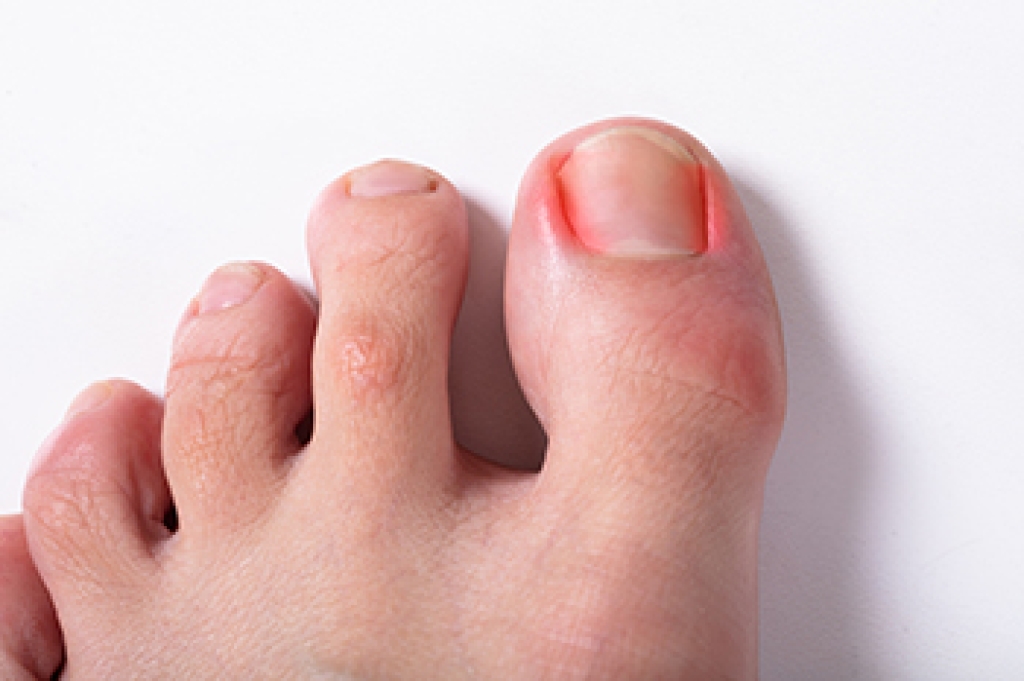
An ingrown toenail is a nail that grows into the skin instead of over it. It is a painful foot condition that generally affects the big toe. It may become infected if prompt medical treatment is not received. There are several reasons an ingrown toenail may develop. These can consist of wearing shoes or socks that are too tight, trimming the toenails incorrectly, or enduring a toe injury. It may become swollen and red, and pus may drain if it becomes infected. Some patients find relief when the affected foot is soaked in warm water, followed by gently pushing the skin away from the nail with a piece of cotton. It is also beneficial to wear shoes that are slightly larger to keep the nail away from the inside of the shoe. Ingrown toenails can be recurring so it is suggested that you visit a podiatrist for a permanent solution and this may include minor surgery for partial or full removal of the nail.
Ingrown toenails can become painful if they are not treated properly. For more information about ingrown toenails, contact Edward Orman, DPM of Honeygo Podiatry. Our doctor can provide the care you need to keep you pain-free and on your feet.
Ingrown Toenails
Ingrown toenails occur when a toenail grows sideways into the bed of the nail, causing pain, swelling, and possibly infection.
Causes
Bacterial infections
Improper nail cutting such as cutting it too short or not straight across
Trauma to the toe, such as stubbing, which causes the nail to grow back irregularly
Ill-fitting shoes that bunch the toes too close together
Genetic predisposition
Prevention
Because ingrown toenails are not something found outside of shoe-wearing cultures, going barefoot as often as possible will decrease the likeliness of developing ingrown toenails. Wearing proper fitting shoes and using proper cutting techniques will also help decrease your risk of developing ingrown toenails.
Treatment
Ingrown toenails are a very treatable foot condition. In minor cases, soaking the affected area in salt or antibacterial soaps will not only help with the ingrown nail itself, but also help prevent any infections from occurring. In more severe cases, surgery is an option. In either case, speaking to your podiatrist about this condition will help you get a better understanding of specific treatment options that are right for you.
If you have any questions, please feel free to contact our offices located in Perry Hall,and Fallston, MD. We offer the newest diagnostic and treatment technologies for all your foot care needs.
Fatigue and hairline fractures are also known as stress fractures. They are small cracks that happens to one or more bones in the foot from overuse. They can be common among athletes or children who frequently participate in sporting activities. It can happen from increasing speed and mileage too quickly, in addition to having an abnormal foot structure. Research has shown that patients who have high arches or flat feet may be prone to developing stress fractures, possibly as a result of a lack of shock absorption that comes from the surrounding muscles. Additionally, wearing shoes that do not fit correctly may lead to getting a stress fracture, or it may happen from running on hard surfaces. Relief may be found when the activity that caused the fracture is temporarily ceased, and the affected foot is elevated. If you have endured a stress fracture of the foot, please consult a podiatrist who can offer you effective treatment methods.
Activities where too much pressure is put on the feet can cause stress fractures. To learn more, contact Edward Orman, DPM from Honeygo Podiatry. Our doctor can provide the care you need to keep your pain free and on your feet.
Dealing with Stress Fractures of the Foot and Ankle
Stress fractures occur in the foot and ankle when muscles in these areas weaken from too much or too little use. The feet and ankles then lose support when walking or running from the impact of the ground. Since there is no protection, the bones receive the full impact of each step. Stress on the feet can cause cracks to form in the bones, thus creating stress fractures.
What Are Stress Fractures?
Stress fractures occur frequently in individuals whose daily activities cause great impact on the feet and ankles. Stress factors are most common among:
Runners
People affected with Osteoporosis
Tennis or basketball players
Gymnasts
High impact workouts
Symptoms
Pain from the fractures occur in the area of the fractures and can be constant or intermittent. It will often cause sharp or dull pain with swelling and tenderness. Engaging in any kind of activity which involves high impact will aggravate pain.
If you have any questions please contact our offices located in Perry Hall,and Fallston, MD. We offer the newest diagnostic and treatment technologies for all your foot and ankle needs.
Toe pain can make every single step excruciating. Toe pain can have many different sources, including injuries, arthritis, and hammertoe. Some of these things can be treated with home care, and some need additional medical intervention. Gout is a form of arthritis that commonly affects the big toe. It is caused by a buildup of uric acid in the bloodstream, and crystals form, which settle in certain joints. It causes severe pain at the base of the big toe, redness, and swelling. Hammertoe is a deformity where toes bend abnormally in the middle joint. The downward flex of the joint looks like a hammer, thus its name. It is most common in the second, third, and fourth toes. A hammertoe can make it difficult to walk, and stretching and moving the toes can be impossible. If you have toe pain, see a podiatrist for medical treatment.
Toe pain can disrupt your daily activities. If you have any concerns, contact Edward Orman, DPM of Honeygo Podiatry. Our doctor can provide the care you need to keep you pain-free and on your feet.
What Causes Toe Pain?
Most severe toe pain is caused due to a sports injury, trauma from dropping something heavy on the toe, or bumping into something rigid. Other problems can develop over time for various reasons.
Toe pain can be caused by one or more ailments. The most common include:
Trauma
Sports injury
Wearing shoes that are too tight
Arthritis
Gout
Corns and calluses
Hammertoe
Bunions
Blisters
Ingrown toenails
Sprains
Fractures (broken bones)
Dislocations
When to See a Podiatrist
Severe pain
Persistent pain that lasts more than a week
Signs of infection
Continued swelling
Pain that prevents walking
Diagnosis
In many cases the cause of toe pain is obvious, but in others, a podiatrist may want to use more advanced methods to determine the problem. These can range from simple visual inspections and sensation tests to X-rays and MRI scans. Prior medical history, family medical history, and any recent physical traumatic events will all be taken into consideration for a proper diagnosis.
Treatment
Treatments for toe pain and injuries vary and may include shoe inserts, padding, taping, medicines, injections, and in some cases, surgery. If you believe that you have broken a toe, please see a podiatrist as soon as possible.
If you have any questions please contact our offices located in Perry Hall,and Fallston, MD. We offer the newest diagnostic and treatment technologies for all your foot and ankle needs.
Sever’s disease is an affliction of the foot that primarily targets adolescent children. Essentially, the condition occurs when the growth plate, located around the heel, becomes inflamed. This can usually occur in children between the ages of 9 and 12, and will sometimes make physical activity more painful and uncomfortable. Sever’s disease has an interesting relationship with youth baseball. For children that engage in baseball, they might be setting themselves up for Sever’s disease if they are overtraining for baseball, as many children are prone to do. Additionally, if the child is engaging in baseball with decreased strength and flexibility, this might also be a contributing factor. If your child plays youth baseball, contact a podiatrist today for more information about Sever’s disease and what you can be doing to help prevent it.
Sever's disease often occurs in children and teens. If your child is experiencing foot or ankle pain, see Edward Orman, DPM from Honeygo Podiatry. Our doctor can treat your child’s foot and ankle needs.
Sever’s Disease
Sever’s disease is also known as calcaneal apophysitis, which is a medical condition that causes heel pain I none or both feet. The disease is known to affect children between the ages of 8 and 14.
Sever’s disease occurs when part of the child’s heel known as the growth plate (calcaneal epiphysis) is attached to the Achilles tendon. This area can suffer injury when the muscles and tendons of the growing foot do not keep pace with bone growth. Therefore, the constant pain which one experiences at the back of the heel will make the child unable to put any weight on the heel. The child is then forced to walk on their toes.
Symptoms
Acute pain – Pain associated with Sever’s disease is usually felt in the heel when the child engages in physical activity such as walking, jumping and or running.
Highly active – Children who are very active are among the most susceptible in experiencing Sever’s disease, because of the stress and tension placed on their feet.
If you have any questions, please feel free to contact our offices located in Perry Hall,and Fallston, MD. We offer the newest diagnostic and treatment technologies for all your foot care needs.
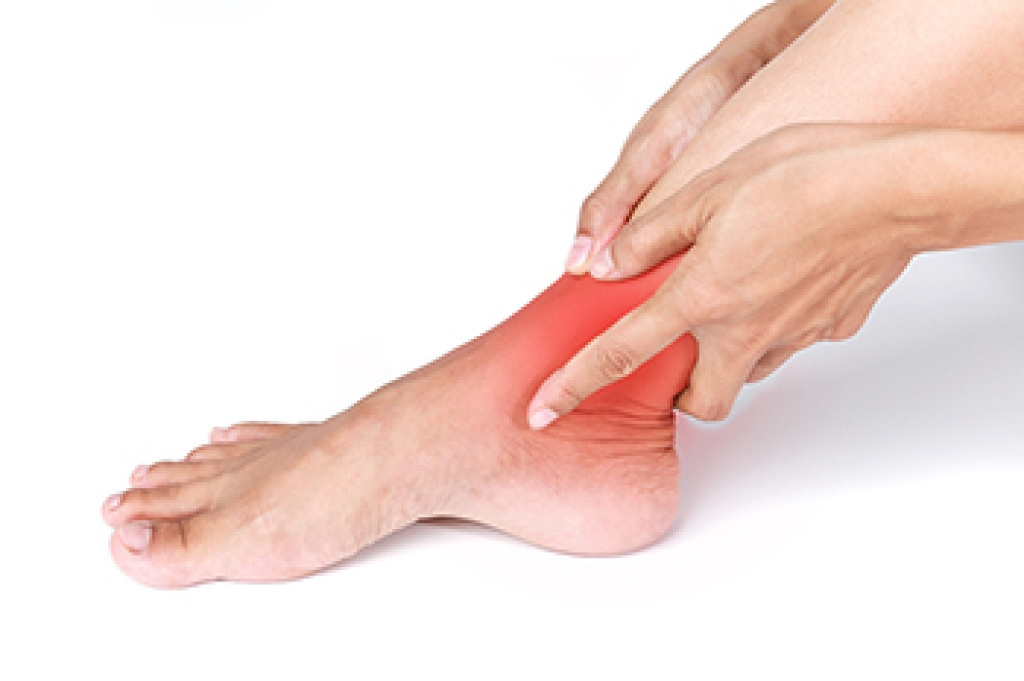
The ankle is one of the most important parts of the lower legs, forming the intersection point with the feet. The ankle enables the foot to move in different directions and serves important mobility functions for walking, running, and jumping. Sometimes, the ankle may cause pain when an individual is walking. There are several different possible explanations for this phenomenon. Namely, there are many different foot conditions and afflictions that might be contributing to or causing your ankle pain. Gout is the first potential culprit. Gout is essentially a kind of arthritis that accumulates in the joints and causes pain. This can be particularly pesky in the ankles. Additionally, ankle pain might result from peripheral neuropathy. This condition is associated with some kind of nerve damage, which can ultimately cause pain in the ankles when walking. Regardless of the cause of ankle pain when walking, the pain can be annoying and severe depending on the case and patient. Contact a podiatrist today if you are experiencing ankle pain.
Ankle pain can have many different causes and the pain may potentially be serious. If you have ankle pain, consult with Edward Orman, DPM from Honeygo Podiatry. Our doctor will assess your condition and provide you with quality foot and ankle treatment.
Ankle pain is any condition that causes pain in the ankle. Due to the fact that the ankle consists of tendons, muscles, bones, and ligaments, ankle pain can come from a number of different conditions.
Causes
The most common causes of ankle pain include:
Types of arthritis (rheumatoid, osteoarthritis, and gout)
Ankle sprains
Broken ankles
Achilles tendinitis
Achilles tendon rupture
Stress fractures
Tarsal tunnel syndrome
Plantar fasciitis
Symptoms
Symptoms of ankle injury vary based upon the condition. Pain may include general pain and discomfort, swelling, aching, redness, bruising, burning or stabbing sensations, and/or loss of sensation.
Diagnosis
Due to the wide variety of potential causes of ankle pain, podiatrists will utilize a number of different methods to properly diagnose ankle pain. This can include asking for personal and family medical histories and of any recent injuries. Further diagnosis may include sensation tests, a physical examination, and potentially x-rays or other imaging tests.
Treatment
Just as the range of causes varies widely, so do treatments. Some more common treatments are rest, ice packs, keeping pressure off the foot, orthotics and braces, medication for inflammation and pain, and surgery.
If you have any questions please feel free to contact our offices located in Perry Hall,and Fallston, MD. We offer the newest diagnostic tools and technology to treat your foot and ankle needs.
Dogs are cute, especially little puppies. But they like to bite and often playfully nip their owner’s feet. If a puppy gets carried away he can pierce the skin, and bacteria from his mouth can get into the foot possibly causing an infection. If this happens, it is important to wash the wound thoroughly to help prevent the bacteria from staying in the body. Infections like tetanus, rabies, or sepsis can develop from such bites. Since infections can spread to other parts of the body, in some cases, antibiotics or vaccinations are needed. If a dog bites your foot and the area swells or becomes red and painful, it is suggested that you consult a podiatrist immediately to get the recommended treatment to halt the spread of a possible infection.
Foot Pain
Foot pain can be extremely painful and debilitating. If you have a foot pain, consult with Edward Orman, DPM from Honeygo Podiatry. Our doctor will assess your condition and provide you with quality foot and ankle treatment.
Causes
Foot pain is a very broad condition that could be caused by one or more ailments. The most common include:
Bunions
Hammertoes
Plantar Fasciitis
Bone Spurs
Corns
Tarsal Tunnel Syndrome
Ingrown Toenails
Arthritis (such as Gout, Rheumatoid, and Osteoarthritis)
To figure out the cause of foot pain, podiatrists utilize several different methods. This can range from simple visual inspections and sensation tests to X-rays and MRI scans. Prior medical history, family medical history, and any recent physical traumatic events will all be taken into consideration for a proper diagnosis.
Treatment
Treatment depends upon the cause of the foot pain. Whether it is resting, staying off the foot, or having surgery; podiatrists have a number of treatment options available for foot pain.
If you have any questions, please feel free to contact our offices located in Perry Hall,and Fallston, MD. We offer the newest diagnostic and treatment technologies for all your foot care needs.
As one gets older, caring for the feet becomes more and more important. A daily regimen of foot care is recommended by experts in geriatrics. Inspecting the feet for cuts, bruises, and sores is something that should be done every day, either by yourself or by a caregiver. Many older people develop underlying conditions that contribute to foot problems that if ignored can have serious repercussions, including numbness, inability to feel hot and cold temperatures, and increased risk of falling. For this reason, maintaining both a healthy diet and doing low-impact exercises regularly can go a long way to keeping you mobile, independent, and able to carry out daily activities. Wearing supportive shoes with ample cushioning is suggested, and going barefoot is to be avoided if possible. If your feet are in constant pain, if they are numb, or if you have sores that take a long time to heal, it is a good idea to consult a podiatrist.
Proper foot care is something many older adults forget to consider. If you have any concerns about your feet and ankles, contact Edward Orman, DPM from Honeygo Podiatry. Our doctor can provide the care you need to keep you pain-free and on your feet.
The Elderly and Their Feet
As we age we start to notice many changes in our body, but the elder population may not notice them right away. Medical conditions may prevent the elderly to take notice of their foot health right away. Poor vision is a lead contributor to not taking action for the elderly.
Common Conditions
Neuropathy – can reduce feeling in the feet and can hide many life-threatening medical conditions.
Reduced flexibility – prevents the ability of proper toenail trimming, and foot cleaning. If left untreated, it may lead to further medical issues.
Foot sores – amongst the older population can be serious before they are discovered. Some of the problematic conditions they may face are:
Gouging toenails affecting nearby toe
Shoes that don’t fit properly
Pressure sores
Loss of circulation in legs & feet
Edema & swelling of feet and ankles
Susceptible Infections
Diabetes and poor circulation can cause general loss of sensitivity over the years, turning a simple cut into a serious issue.
If you have any questions, please feel free to contact our offices located in Perry Hall,and Fallston, MD. We offer the newest diagnostic and treatment technologies for all your foot care needs.