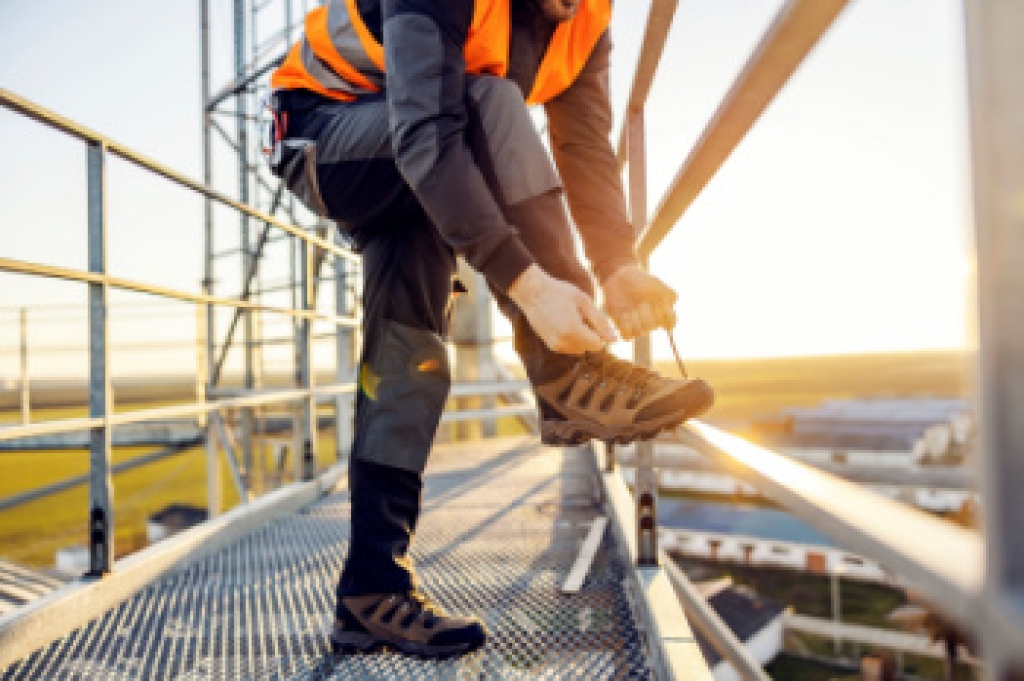
Construction jobs expose workers to heavy equipment, sharp materials, and uneven surfaces, making safety shoes a vital part of personal care. These shoes are designed to protect the feet from impact, compression, and other workplace hazards. Different types of safety shoes serve different needs. Steel toe shoes help shield toes from falling objects, while met guard shoes protect the top of the foot from heavy impacts. Waterproof safety shoes keep feet dry and reduce the risk of skin irritation when working in wet conditions. Wearing the right safety footwear can improve stability, comfort, and confidence on the job site. A podiatrist can assess foot structure, work demands, and pain concerns to recommend proper safety shoes and custom orthotics for added support. If foot discomfort is interfering with your job responsibility, it is suggested that you consult a podiatrist who can treat various foot conditions, and guide you on appropriate shoes to wear for your workday.
While working on the feet, it is important to take the proper care of them. For more information about working on your feet, contact Edward Orman, DPM from Honeygo Podiatry. Our doctor will treat your foot and ankle needs.
Working on Your Feet
Standing on your feet for long periods of time can cause stress and pain in your feet. Your whole body may experience change in terms of posture, back pain, bunions, callouses and or plantar warts. There are ways to avoid these conditions with proper foot care, smart choices and correct posture.
Positive Changes
Negative heeled shoe – Choosing this shoe type places the heel slightly lower than the ball of the foot. These are great for overall foot health. Find shoes that fit you correctly.
Go barefoot – Our feet were not designed to be enclosed for all hours of the day. Try to periodically expose your feet to air.
Eliminate Pain
Foot Exercises – Performing simple exercises, incorporating yoga and doing stretches are beneficial. This will allow increased blood flow to the area and muscles of the foot.
Achilles tendon – Stretching the foot out flat on the floor will relax the calf muscles and tendon. These exercises can be performed almost anywhere. Make sure you add these exercises to your daily regimen.
With a little bit of this information and knowing more about foot health, you will notice changes. Foot stretches and proper footwear will help with pain and prevent further issues.
If you have any questions please contact our offices located in Perry Hall, and Fallston, MD . We offer the newest diagnostic and treatment technologies for all your foot and ankle needs.
